
Worcester OUI Lawyer
Strategic OUI defense for Worcester residents and anyone arrested in Worcester or on the I-290 corridor. Attorney Adela Aprodu represents clients in Worcester District Court — first-offense 24D, breath test challenges, refusal suspensions, and RMV implied-consent hearings.
OUI Defense in Worcester, MA
Worcester sits at the crossroads of central Massachusetts, and its OUI arrests reflect it: I-290 cuts straight through downtown, I-190 feeds in from the north, and Route 9 and Route 146 carry commuter and weekend traffic from every direction. Worcester Police handle the city streets while Massachusetts State Police work the highways, and a college city's bar scene keeps weekend patrols busy. Whichever agency makes the stop, a misdemeanor first or second offense is prosecuted at Worcester District Court, 225 Main Street. Felony charges — a third or subsequent offense, or OUI causing serious bodily injury under M.G.L. c. 90 § 24L — begin there as well, with the gravest cases, including OUI manslaughter under § 24G, subject to indictment in Worcester County Superior Court.
An OUI charge sets off two separate proceedings at once. The court decides guilt; the Registry of Motor Vehicles decides your license, and it does not wait — an implied-consent suspension after a breath-test refusal takes effect immediately, and the deadline to request the RMV hearing that contests it is just 15 days. Attorney Adela Aprodu manages the courtroom and the Registry in parallel from the outset, because losing the administrative fight can hurt as much as losing the criminal one.
What is actually at risk breaks down into four categories:
- Incarceration — up to 2.5 years in the House of Correction on a first offense (rarely imposed); 60 days to 2.5 years with a 30-day mandatory minimum on a second; and on a third offense — now a felony — 180 days to 5 years in state prison. OUI causing serious bodily injury (§ 24L) reaches 10 years; OUI manslaughter (§ 24G) reaches 15, with a minimum 15-year license loss on top.
- Money — fines run $500–$5,000 on a first offense and $600–$10,000 on a second, before probation supervision fees and program costs are added.
- Your license — one year gone on a first conviction (cut to 45–90 days under 24D), two years on a second, eight years on a third; refusing the breath test adds its own independent suspension of 180 days, 3 years, 5 years, or lifetime depending on your history, contestable only within the 15-day hearing window.
- Alternative dispositions — the 24D program pairs a year of probation with a 16-week driver alcohol education (DAE) course and ends in dismissal, though the resulting CWOF counts as a prior for 10 years; second offenders with 7+ years between incidents may qualify for the Cahill treatment disposition instead of mandatory jail.
About the Court — Where Worcester OUI Cases Are Heard
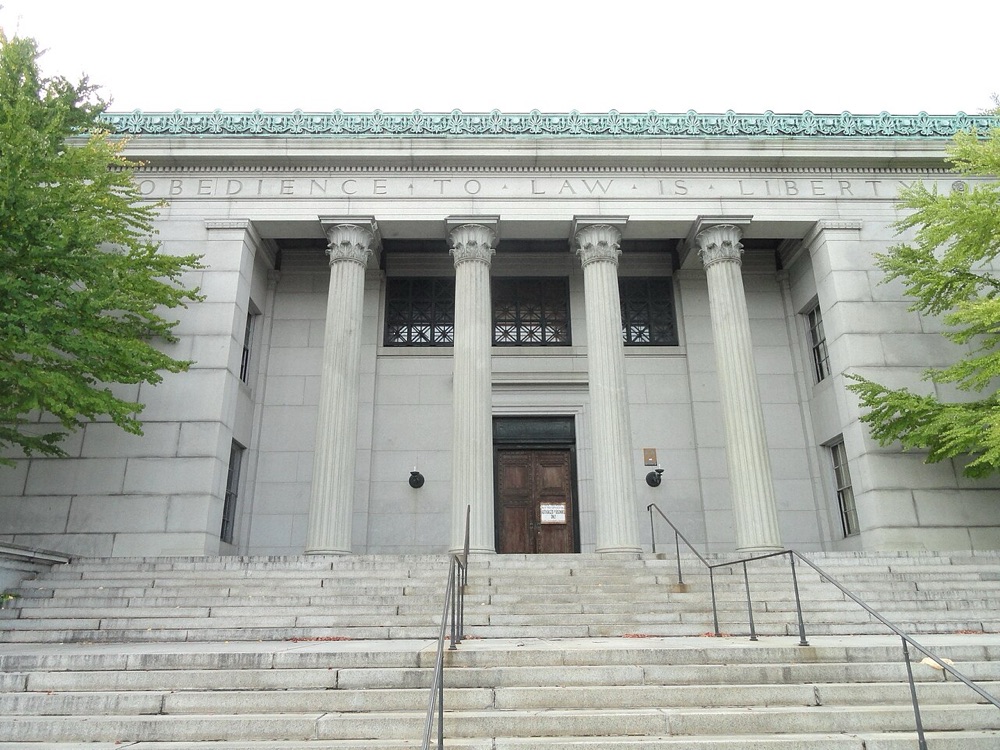
Both trial-level courts that matter for a Worcester OUI share the Main Street complex: Worcester District Court at 225 Main Street takes every misdemeanor OUI from arraignment to verdict, and Worcester County Superior Court — the destination for indicted felony cases — sits within the same building. That concentration means one courthouse, one clerk's office, and one pool of prosecutors handling nearly every drunk-driving case in the region.
Attorney Adela Aprodu practices in courts across the Commonwealth, Worcester County included, and treats the first appearance as the start of strategy rather than a formality — bail arguments, discovery demands, and motion schedules set in the opening weeks determine what leverage exists months later at a suppression hearing or trial.
Worcester OUI Stop Locations and Arresting Agencies
- I-290 and the highways — the interstate corridors through the city are State Police ground, and a trooper's arrest comes with MSP-specific reports, instruments, and supervisory review — details a defense built around a local-PD case would miss
- Route 9 and Park Avenue — Worcester Police concentrate on these commercial strips, with enforcement heaviest Thursday through Saturday nights as the college-weekend crowd moves between venues
- Shrewsbury Street and the downtown district — the restaurant row and its connecting streets are routine late-night patrol territory, where minor traffic infractions become the stated basis for OUI stops
- Sobriety checkpoints — MSP checkpoints appear periodically in Worcester County; Commonwealth v. McGeoghegan demands advance announcement and a written operating protocol, and a checkpoint run outside those rules invites suppression
Worcester OUI: Court, RMV & Enforcement Logistics
- District Court (misdemeanor OUI) — Worcester District Court at 225 Main Street, Worcester, is where first and second offenses are arraigned, litigated, and tried.
- Felony OUI — indicted cases — third or subsequent offenses, § 24L serious-bodily-injury charges, and OUI manslaughter — proceed in Worcester County Superior Court, located in the same Trial Court complex at 225 Main Street.
- License & the RMV — the Worcester RMV Service Center at 50 Southwest Cutoff handles reinstatement and license business for area drivers; challenges to suspensions and implied-consent findings are heard by the Massachusetts Board of Appeal in Boston.
- Highway enforcement — the Holden Barracks at 612 Main Street, Holden — headquarters of State Police Troop C — patrols I-290, I-190, Route 9, and Route 146, with the Worcester Police Department covering the city itself.
- Local enforcement — when the MSP schedules a sobriety checkpoint, the county is disclosed ahead of time but the precise location is not, and Worcester County appears on that list regularly.
How Worcester OUI Cases Are Defended
Defending a Worcester OUI means auditing the Commonwealth's case at each of its three weakest joints. The stop comes first: on a highway like I-290, a trooper needs articulable cause to pull you over, and dash-camera video frequently tells a tamer story than the report does. Then the roadside exercises: field sobriety tests administered on a shoulder at 1 a.m., in central Massachusetts weather, against passing traffic, rarely match the controlled conditions they were validated under. Finally the breath score: every one in Massachusetts comes from a Draeger Alcotest 9510, and the Commonwealth v. Ananias litigation established just how vulnerable those scores are to calibration, certification, and 15-minute-observation defects. OUI-drugs prosecutions are thinner still — no per se limit exists and no breath number, and Commonwealth v. Gerhardt holds that roadside tests cannot be presented as proof of marijuana impairment.
Related reading: OUI/DUI defense overview · breathalyzer challenges · field sobriety tests.
Your License After a Worcester OUI
In central Massachusetts, losing your license usually means losing your mobility outright — there is no subway to fall back on, and most jobs, classes, and family obligations here assume a car. The Registry acts fast: a first breath-test refusal brings 180 days of suspension all by itself, climbing to multi-year and even lifetime losses for repeat refusals, and the hearing to contest it must be requested within 15 days. The hardship “Cinderella” license is the safety valve — most first offenders qualify — and Melanie's Law requires an ignition interlock device for every repeat offender who gets back on the road.
Full guides: refusing the breath test · hardship licenses · OUI penalties.
Key Takeaways
- One complex at 225 Main Street houses both Worcester District Court (misdemeanor OUI) and Worcester County Superior Court (indicted felonies)
- Highway stops on I-290, I-190, Route 9, and Route 146 are Troop C territory; city stops belong to Worcester PD — two different evidence trails
- Weekend enforcement runs heaviest Thursday through Saturday nights along the bar and restaurant corridors
- A refusal suspension starts immediately and is contested separately — the 15-day RMV hearing deadline controls
- 24D shortens a first offender's suspension to 45–90 days but leaves a CWOF that counts as a prior for a decade
Frequently Asked Questions
At 225 Main Street. Worcester District Court, which occupies the Trial Court complex there, handles every first- and second-offense OUI prosecution arising in the city. If the Commonwealth indicts a felony — a third offense, serious bodily injury under § 24L, or OUI manslaughter under § 24G — the matter moves to Worcester County Superior Court in the same complex. Separately, the Registry of Motor Vehicles administers any license suspension on its own administrative timetable, independent of what happens in the courtroom.
It is how most first offenses across Massachusetts resolve, named for M.G.L. c. 90 § 24D. In exchange for a continuance without a finding (CWOF), you serve a year on probation, complete the 16-week driver alcohol education program, and see your suspension cut to 45–90 days rather than a full year. Finish probation and the case is dismissed with no conviction on your record — but the disposition is treated as a first offense for 10 years, so a later OUI inside that window is prosecuted as a second.
Yes — and many drivers do, because § 24(1)(e) keeps the refusal out of evidence at trial, denying the Commonwealth a BAC number to put before the jury. The cost lands on your license instead: an automatic implied-consent suspension of 180 days for a first refusal, 3 years for a second, 5 years for a third, and lifetime for a fourth. Because that suspension begins immediately, the 15-day deadline to request an RMV hearing is the very first thing to calendar after a refusal arrest.
Yes — the arresting agency changes the case. I-290 stops are usually Massachusetts State Police work, governed by MSP report formats, MSP-maintained Draeger Alcotest instruments, and MSP supervisory sign-off. The State Police OUI investigation manual sets out how a stop is supposed to proceed, and any gap between the manual and what actually happened on the highway is cross-examination material. Demand the cruiser video early; it often preserves details the written report leaves out.
The statute sets a range of 60 days to 2.5 years in the House of Correction, of which 30 days is mandatory, together with a $600–$10,000 fine and a 2-year license suspension. The gap between offenses matters: when 7 or more years separate the new charge from the prior, the Cahill disposition under M.G.L. c. 90 § 24D can replace the mandatory jail time with an alcohol treatment program.
Three routes lead there. The third offense is charged as a felony under M.G.L. c. 90 § 24(1)(a)(1) — 180 days mandatory minimum, up to 5 years in state prison, and an 8-year loss of license. OUI causing serious bodily injury is a felony under § 24L no matter how clean your record is, with up to 10 years of exposure. And OUI manslaughter under § 24G is the most serious of all, punishable by up to 15 years.
Massachusetts OUI/DUI Defense Resources
OUI Defense in Other Massachusetts Cities
Every district court runs its OUI session a little differently. Attorney Aprodu maintains city-specific pages for the Massachusetts communities she serves:
Free Consultation — (978) 406-9090
Attorney Adela Aprodu answers Worcester OUI questions personally. Reach out for a free, confidential case review before the RMV deadline passes.
Contact the Firm