
Andover OUI Lawyer
Strategic OUI defense for Andover residents and anyone arrested in Andover or at the I-93 and I-495 interchange. Attorney Adela Aprodu represents clients in Lawrence District Court — first-offense 24D, breath test challenges, refusal suspensions, and RMV implied-consent hearings.
Looking for an OUI Law Firm in Andover?
Aprodu Law is an OUI defense law firm serving Andover, Massachusetts. As an Andover OUI attorney with an office ten minutes away in Danvers, Adela Aprodu takes OUI cases at every level — first offense through felony — into Lawrence District Court, while managing the parallel RMV license suspension the arrest sets in motion. The consultation is free, and because the Registry allows only 15 days to request a hearing, calling (978) 406-9090 early matters.
OUI Defense in Andover, MA
An Andover OUI arrest typically begins on Route 28 (North Main Street), Route 133, or the I-93 and I-495 corridors, where Massachusetts State Police make most stops near the Dascomb Road and River Road interchanges. The case lands in Lawrence District Court at 2 Appleton Street for misdemeanor first or second offenses; felony charges — third or subsequent offenses or OUI causing serious bodily injury (M.G.L. c. 90 § 24L) — also begin in Lawrence District Court, though the Commonwealth may indict the most serious offenses, such as OUI manslaughter (§ 24G), to Essex County Superior Court in Salem.
Every Massachusetts OUI charge splits into two fights at once. The first plays out on the criminal docket in Lawrence; the second is administrative, before the Registry of Motor Vehicles, which moves on its own schedule and does not wait for a verdict. Refuse the breath test and the implied-consent suspension takes effect right away, whatever the courtroom later decides. Attorney Adela Aprodu takes on both fronts from the first phone call, because the Registry gives you just 15 days to request a hearing — let that window close and the suspension challenge is gone for good.
- Breathalyzer Refusal — an automatic license loss under implied consent: 180 days on a first refusal, then 3 years, 5 years, and lifetime for a fourth; only 15 days to demand the RMV hearing
- First Offense OUI — a misdemeanor exposing the driver to as much as 2.5 years in the House of Correction, a fine between $500 and $5,000, and a one-year license loss; the 24D alternative shrinks that suspension to 45–90 days for most first offenders
- Second Offense OUI — 30 days behind bars is mandatory, with exposure running from 60 days to 2.5 years HOC, a $600–$10,000 fine, and two years without a license; drivers with 7+ years between offenses may qualify for the Cahill treatment disposition
- Third Offense OUI — now a felony: 180-day mandatory minimum, up to 5 years in state prison, an 8-year suspension, and possible indictment to Essex Superior Court
- OUI with Serious Bodily Injury (§ 24L) — felony exposure of up to 10 years in state prison
- OUI Manslaughter (§ 24G) — felony; up to 15 years in state prison and a minimum 15-year license loss
About the Court — Where Andover OUI Cases Are Heard
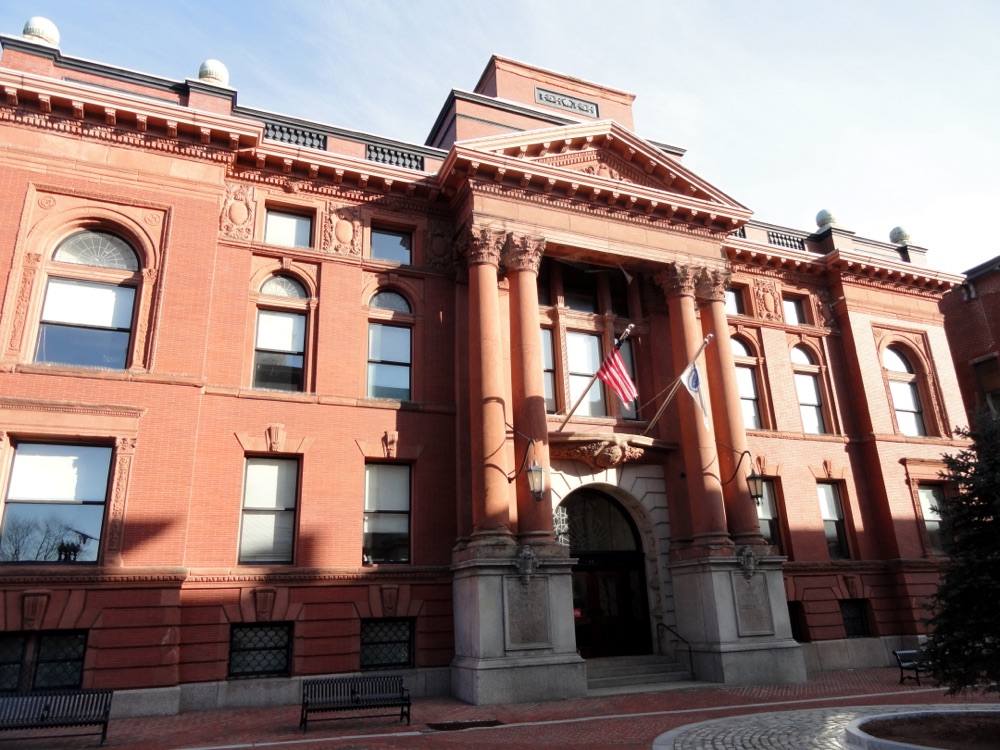
Andover falls within the jurisdiction of Lawrence District Court, at 2 Appleton Street in Lawrence, in the heart of the Merrimack Valley. The court is part of the Essex County system and also serves North Andover, Methuen, and Lawrence. A first or second-offense Andover OUI is arraigned and tried here; the most serious felony cases can be indicted to Essex County Superior Court in Salem.
Local familiarity matters in an OUI case. Attorney Adela Aprodu appears regularly in the Essex County courts and knows how the Lawrence session handles its OUI docket — from arraignment and the pretrial conference through motions to suppress and trial. That day-to-day knowledge of the courthouse, the clerk’s office, and the prosecutors shapes the defense from the first appearance.
Andover OUI Stop Locations and Arresting Agencies
- I-93 / I-495 interchange — most Andover OUIs are MSP stops near the Dascomb Road and River Road interchanges and the I-93/I-495 split. MSP report formats, instruments, and supervisory chains differ from local PD
- Route 28 / Main Street — Andover PD makes stops along the downtown and Shawsheen Village commercial corridors; bar-area patrols intensify Thursday–Saturday nights
- Route 133 (Andover Street) — a secondary corridor connecting to North Andover and Lawrence and a common late-night patrol route
- River Road business district — the hotel and restaurant cluster beside I-93 generates weekend OUI stops
- Sobriety checkpoints — MSP runs occasional checkpoints in Essex County. Under Commonwealth v. McGeoghegan, checkpoints must be announced in advance and follow a written protocol; deviations open suppression challenges
Andover OUI: Court, RMV & Enforcement Logistics
- District Court (misdemeanor OUI) — first and second offenses are arraigned and tried at Lawrence District Court (Fenton Judicial Center), 2 Appleton Street, Lawrence.
- Felony OUI — third or subsequent offenses, OUI causing serious bodily injury, and OUI manslaughter are indicted to Essex County Superior Court, Lawrence (43 Appleton Way) or Salem (56 Federal Street).
- License & the RMV — reinstatements and license business for Andover drivers run through the Lawrence RMV Service Center, 73 Winthrop Avenue, Lawrence; suspension and implied-consent appeals go to the Massachusetts Board of Appeal in Boston.
- Highway enforcement — Andover's highways — I-93, I-495 and Routes 28/133 — are patrolled by the State Police Andover Barracks (Station A-1) at 31 Gould Road.
- Local enforcement — The Andover barracks is one of the busiest in Massachusetts for drunk-driving arrests — troopers there made 343 OUI arrests in a single year, most on weekend nights — and the I-93/I-495 interchange leads the state for OUI arrests.
How Andover OUI Cases Are Defended
Defending an OUI out of Andover starts with the stop itself — a trooper needs an articulable reason to pull a car over on I-93, and marked-lanes observations are often thinner than the report makes them sound. From there the defense attacks the roadside phase (were the field sobriety tests demonstrated, scored, and run on level ground the way the training manual requires?) and the station phase, where the Draeger Alcotest 9510 produces the breath number. Alcotest results have been kept out of evidence across Massachusetts over calibration records, certification lapses, and failures of the 15-minute observation period — the litigation consolidated in Commonwealth v. Ananias. Where the allegation is drugged driving, the Commonwealth's hand is weaker: no instrument measures drug impairment, no per se threshold exists, and Commonwealth v. Gerhardt bars roadside assessments from being presented as scientific proof that a driver was high on marijuana.
Read more on the firm's OUI/DUI defense overview, breathalyzer challenge, and field sobriety test pages.
Your License After an Andover OUI
For the Andover commuter who takes I-93 or Route 28 to work every morning, losing the license is often the most urgent part of the case — and it is decided at the Registry, not in the courtroom. A breath-test refusal alone costs a first offender 180 days of driving privileges immediately, and repeat refusals escalate all the way to a lifetime loss. The clock to contest it is unforgiving: 15 days to ask the RMV for a hearing. A hardship “Cinderella” license keeps most first offenders on the road for work hours, and Melanie's Law attaches an ignition interlock requirement to any second or subsequent offense.
More on refusing the breath test, hardship licenses, and OUI penalties.
Key Takeaways
- Andover OUI cases are heard in Lawrence District Court (misdemeanors) or Essex Superior Court (felonies)
- Most Andover OUI arrests are MSP stops on I-93 or I-495 — trooper paperwork and instrument protocols differ from local PD and open cross-examination angles
- Choosing between the 24D disposition and trial is a judgment call driven by the evidence, not a default
- The Registry suspension runs on its own clock — the hearing must be requested within 15 days or the challenge is lost
- Even a dismissed 24D is treated as a first offense if another OUI follows within 10 years
Frequently Asked Questions
First- and second-offense (misdemeanor) OUI charges from an Andover arrest are arraigned in Lawrence District Court at 2 Appleton Street. Felony charges — a third or subsequent offense, or OUI causing serious bodily injury — start there as well, though the Commonwealth can take the gravest of them, such as OUI manslaughter, to Essex County Superior Court in Salem by indictment. Whatever the courtroom, the Registry of Motor Vehicles decides the implied-consent suspension on its own administrative track, and nothing the criminal court does controls that outcome.
The 24D disposition resolves a first-offense OUI as a continuance without a finding (CWOF) under M.G.L. c. 90 § 24D. In exchange for a year on probation, the 16-week driver alcohol education (DAE) course, and probation fees, the license suspension drops from a full year to 45–90 days, and the charge ends in dismissal with no conviction. The catch: for the next 10 years the disposition is treated as a prior, so a later OUI is prosecuted as a second offense.
Refusing is legal, but under the implied-consent statute the Registry suspends your license automatically — 180 days the first time, 3 years the second, 5 years the third, and for life on a fourth refusal. What the jury never learns is that you refused: § 24(1)(e) keeps the refusal out of the trial entirely, which can leave the Commonwealth with a thinner case. File the RMV hearing request within 15 days — it is the only path to fighting the suspension.
Yes. I-93 OUIs are typically MSP stops, which means MSP report formats, breath-test instruments (often a Draeger Alcotest), and supervisory protocols. MSP troopers train on a specific OUI investigation manual; deviations from the manual create cross-examination opportunities. The cruiser camera footage often shows things the report omits, so early discovery requests for video are essential.
When the new charge falls within 10 years of the first, the statute exposes you to 60 days to 2.5 years in the House of Correction — 30 days of it a mandatory minimum — a fine between $600 and $10,000, and a two-year license suspension. Where at least 7 years separate the two OUIs, some second offenders qualify for a Cahill disposition under M.G.L. c. 90 § 24D, substituting alcohol treatment for the jail term.
The third offense is the felony line under M.G.L. c. 90 § 24(1)(a)(1): a 180-day mandatory minimum, state-prison exposure of up to 5 years, and an 8-year license suspension. Two charges are felonies no matter how clean the record is — OUI causing serious bodily injury under § 24L, and OUI manslaughter under § 24G, which carries up to 15 years.
Related Andover Practice Areas
OUI Defense in Other Massachusetts Cities
OUI defense is a statewide practice for Attorney Aprodu — city-specific pages:
Free Consultation — (978) 406-9090
Talk through your Andover case directly with Attorney Adela Aprodu — the initial consultation is free and confidential.
Contact the Firm